
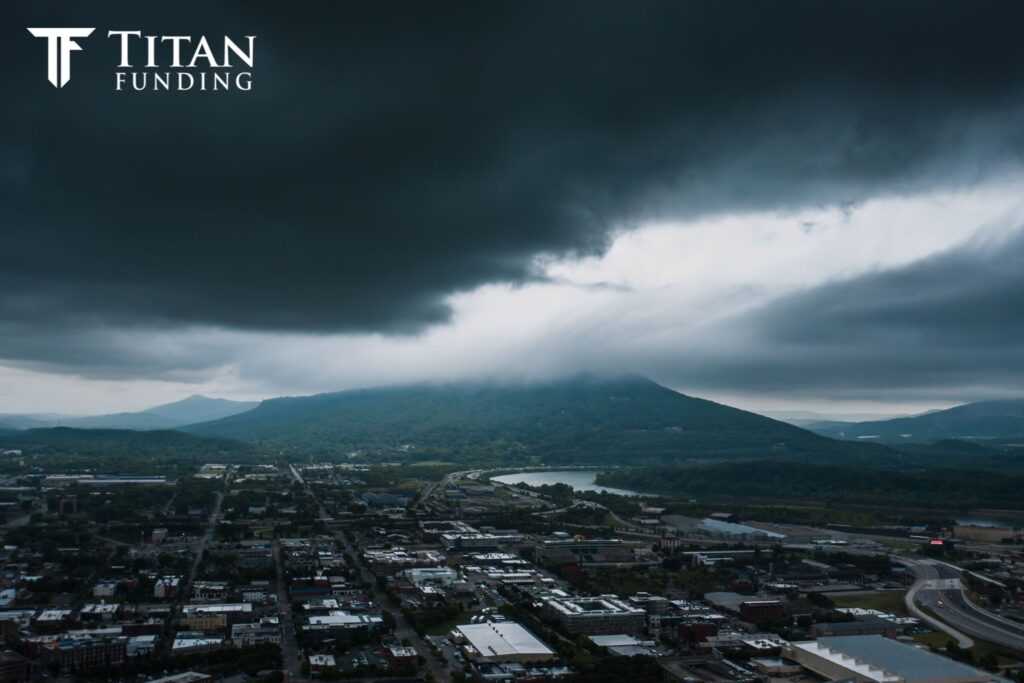
The 2026 Atlantic hurricane season is on pace to make history for an unexpected reason: as of September 21, the basin had not produced a single hurricane, the first time this late into the year since 1914. According to the National Weather Service, six named tropical storms have formed so far (Arthur, Bertha, Cristobal, Dolly, Edouard, and Fay), but none reached hurricane strength. For investors using Bridge Loans in Florida, this unusual season is a reminder that weather conditions can still affect property inspections, underwriting, and closing timelines, even when major hurricanes have yet to develop.
That is context, not a plan. NOAA’s August 6, 2026 update still calls for a seasonal total of 7 to 13 named storms and up to six hurricanes through November 30, and Colorado State University’s Phil Klotzbach — the most cited academic hurricane forecaster in the country — has consistently reminded reporters that “a quiet season is not a safe season.” The 1992 season produced only seven named storms. One of them was Andrew.
If you’re financing a Florida deal with bridge loans in Florida between now and Thanksgiving, you’re not just financing a property. You’re navigating an insurance market that may pause binding new coverage when the National Hurricane Center identifies a storm threat near the state. This restriction, often called “the box” in the insurance industry, is one reason bridge loan closings can be delayed during hurricane season. Understanding how these coverage restrictions work and planning ahead can help borrowers reduce avoidable delays and keep their transactions on schedule.
Here’s what actually happens, how the 2026 Florida insurance market has changed the calculus, and how we structure closing timelines at Titan so a named storm doesn’t blow up your deal.
When “the box” closes
The binding moratorium is not a state order. It is a carrier practice, applied nearly uniformly across the Florida market, and it is triggered by the National Hurricane Center’s public advisories — not by an internal risk model or a case-by-case judgment call.
The rule most Florida carriers follow reads roughly like this: no application for new coverage or endorsement for increased coverage may be bound, written, or issued — regardless of effective date — when a tropical depression, tropical storm, hurricane watch, or hurricane warning has been issued by the National Weather Service for any part of the state of Florida.
Read that again slowly. “Any part of the state.” A tropical storm warning issued for Pensacola stops binding in Miami. A depression forming off Cape Canaveral stops binding in Naples. The moratorium is statewide.
It applies to homeowners, flood, and wind coverage. It applies to Citizens Property Insurance, Florida’s insurer of last resort. It applies to most of the private admitted carriers. It also applies to most surplus lines and E&S markets, though a few have narrower rules based on distance from the storm track. The moratorium typically lifts somewhere between 24 and 78 hours after the threat clears, depending on the carrier.
One point that surprises borrowers: Florida carriers, unlike some out-of-state markets, will not grant exceptions for pending real estate closings. The Dopazo & Associates agency, which specializes in coastal property placement, has published this plainly: “While carriers in other states may make binding restriction exemptions for loan closings, Florida insurance providers will not. It’s important to time your binding accordingly, or else you may risk running out of time to bind insurance before you have to close the loan.”
That’s the mechanism. If you have not bound your policy before the NHC issues an advisory, and the box closes, you are waiting. Your lender cannot fund. Your closing is on hold until the carrier lifts the freeze.
How this hits a bridge loan closing specifically
Bridge loans are short-fuse instruments. They exist because banks are too slow. That’s the whole product. Which means a hurricane-driven closing delay is more expensive on a bridge deal than it is on a conventional purchase.
The specific pain points, in the order borrowers usually feel them:
Purchase contract deadlines get exposed. If your contract has a hard closing date and a small (or no) extension right, a five-day binding delay can put you in default. Sellers who have been waiting for weeks are not sympathetic. Some will use it as leverage.
Rate lock expiration on any secondary financing. If you’re bridging into a takeout with a conventional lender, that permanent loan’s rate lock has a shelf life. Extending it costs money. In a rising-rate week, extension can cost real basis points.
Draw schedules on fix-and-flip and construction loans get compressed. Every day between the target close and the actual close is a day off the rehab or build window. If you’re working a 6-month flip, losing a week to insurance binding is meaningful.
Carrying costs on the outbound side. Existing debt, utilities, taxes, and property management on the property you’re selling continue to accrue while you wait.
And the one nobody plans for: the second storm. If a system spins up while you’re still waiting for the first moratorium to lift, the freeze can extend for another two to five days. This happened to more than one deal on our books during the 2024 season.
The 2026 Florida insurance market — what’s actually changed
The good news for borrowers in 2026 is that Florida’s insurance market has stabilized meaningfully after several brutal years. The bad news is that “stabilized” still means “the most expensive homeowners market in the country.”
These figures matter when underwriting DSCR and cash flow for any bridge-to-rental or fix-and-hold strategy involving Bridge Loans in Florida. Citizens Property Insurance had 293,465 policies in force as of June 5, 2026, its lowest level in 25 years, according to the insurer’s own reporting. In March 2026, Insurance Commissioner Michael Yaworsky approved an 8.7% average rate decrease for Citizens’ standard homeowners policies, effective July 1, 2026, for renewals. Since the 2022–2023 tort reforms, 21 new residential property insurers have been approved to operate in Florida, according to the Florida Office of Insurance Regulation. The American Property Casualty Insurance Association also reported in May 2026 that homeowners insurance litigation in Florida had fallen nearly 50% in the 18 months since the reforms took effect. Together, these developments make insurance costs and policy availability important variables to monitor when evaluating Bridge Loans in Florida, particularly when projecting rental income, operating expenses, and debt service coverage.
The statewide average premium sits somewhere between $3,815 and $5,700 per year for a standard single-family policy, depending on which trade group’s methodology you use. That’s still roughly three times the national average, and it materially affects DSCR calculations on rental exits.
For a bridge borrower, three things follow from this market shift.
First, availability is better than it was 18 months ago. If you’re bringing a Florida deal to a broker today, you have more admitted carriers to place with than you did in 2023 or 2024. That means faster binding in normal conditions.
Second, older properties are still a problem. Most Florida carriers will not write, or will only write on actual-cash-value terms, roofs older than 15 to 20 years. If you’re buying a coastal property built before 2005 with an original roof, that roof is going to be a due diligence item, and possibly an insurance placement problem that pushes you into the surplus lines market.
Third, wind mitigation reports are among the most cost-effective documents you can obtain when evaluating Bridge Loans in Florida. Florida Statute 627.0629 requires insurers to provide credits for verified mitigation features, including hurricane straps, opening protection, roof deck attachment, secondary water resistance, and roof shape. A completed inspection form is valid for five years and typically produces 20% to 45% savings on the wind portion of the premium. On a $5,000 policy, that translates to $1,000 to $2,250 in annual savings for a $150 inspection. If the property you plan to acquire doesn’t already have a report, order one during due diligence to improve your operating expense projections and cash flow estimates.
How we structure closing timelines around the box
At Titan Funding, we close bridge loans in Florida every week of the year. Twelve years running the business, we’ve learned the hard way what works during hurricane season. A few things we ask brokers and borrowers to do between June 1 and November 30:
Order the insurance quote the same day the term sheet is signed. Not the day of appraisal review, not the day before closing. Same day as the term sheet. This gives your broker and the carrier time to underwrite the property, order a wind mitigation inspection if needed, and price accurately.
Bind coverage no later than five to seven business days before the target close date. That buffer is the whole point. If a tropical system develops in that window, you’ve already bound. The lender has proof of insurance. The closing goes forward. If you wait to bind until 48 hours before close, you have no buffer.
Have a backup carrier queued. If your primary carrier balks at the roof age or a claims history point, your broker should have a second admitted market or an E&S option ready. Waiting for one carrier to formally decline and then starting the shopping process from scratch is a week you don’t have during peak season.
For flood coverage, plan around the 30-day NFIP waiting period. National Flood Insurance Program policies do not take effect immediately in most cases — there’s a standard 30-day waiting period from application to effective date, with narrow exceptions (loan closings do qualify for the loan-closing exception, which waives the waiting period). Private flood carriers move faster but follow the same hurricane-binding discipline as wind carriers. If your deal is in a flood zone, order flood at the same time as wind.
For fix-and-flip and ground-up construction, understand that builder’s risk policies have their own binding rules and their own moratorium behavior. Some carriers will not bind builder’s risk during a named storm even for properties in an unaffected part of the state. Confirm with your broker before finalizing the closing timeline.
If a named storm develops between the date you locked your bridge financing and the date you were supposed to close, communicate early with the lender, the seller, and the title company. Everyone in the deal chain will move a lot faster if they hear from you at the moment the NHC names the system, not the day the closing was supposed to happen.
The property-level checks that save deals
Some of what determines whether you close on time comes down to the property itself, not the storm. A short list of the items that most frequently create binding problems for Florida investment properties:
Roof age and material. If the roof is over 15 years old, expect friction. Some carriers cap coverage at actual cash value on older roofs; others will not write at all. A recent roof, with permits pulled and closed out, is a green light. If you’re buying a fix-and-flip with a plan to replace the roof, understand you may need a short-term surplus-lines binder to close, followed by a rewrite once the new roof is in.
Wind mitigation features. A four-point inspection is different from a wind mitigation inspection. Both are useful. The wind mitigation form is the one that drives the credit under Florida law.
Prior claims history on the property. Two or more claims in the past three to five years, even under a prior owner, will complicate placement. Your broker can order a CLUE report early to spot this before you go under contract.
Distance to coast. Properties within 1,500 feet of the coastline face additional underwriting and often require a separate windstorm policy. This is not a dealbreaker, but it changes the placement timeline.
Prior denials. If a previous owner or a previous placement attempt was declined by an admitted carrier, that shows up in the underwriting file and can slow re-placement. Not a reason to walk from the deal, but a reason to start early.
What we tell first-time Florida borrowers
If you’re entering a Florida deal from a state without a coastal insurance market, the biggest mistake is assuming insurance is a formality that can be handled the week of closing. It isn’t. When arranging bridge loans in Florida, especially during hurricane season, insurance becomes a second underwriting process running parallel to loan underwriting, with its own timeline, carrier requirements, and external factors that can delay approval or closing.
Treat it that way. Order the quote first. Bind early. Keep a backup ready. Understand that the state has one of the most sophisticated hurricane-risk pricing markets in the country, and that pricing has real reasons behind it that are actually getting better in 2026 for the first time in a decade.
The 2026 season may end without a landfalling major hurricane. It also may not. The mechanics of the binding moratorium do not care what NOAA predicted in August. They only care what the NHC advisory says today.
If you want to walk through a Florida bridge or fix-and-flip scenario with us — including how our timeline changes between hurricane and non-hurricane season, and how our underwriting handles insurance placement risk — reach out. We fund Florida deals in as few as ten days, hurricane season included, and we’ve seen most of what can go wrong on the insurance side.
Edward Piazza • Co-founder, Titan Funding
Sources cited
-
NOAA / National Weather Service, "NOAA maintains prediction for below-normal Atlantic hurricane season" (Aug. 6, 2026). https://www.noaa.gov/news-release/noaa-maintains-prediction-for-below-normal-atlantic-hurricane-season
-
NOAA / National Hurricane Center, current-season advisories and storm history for 2026. https://www.nhc.noaa.gov/
-
WCAX / Gray Media, "First Atlantic hurricane season without a hurricane by Sept. 21 in 112 years" (Sept. 21, 2026). https://www.wcax.com/2026/09/21/first-atlantic-hurricane-season-without-hurricane-by-sept-21-112-years/
-
Citizens Property Insurance Corporation, "Citizens Recommends Rate Cuts for Most Policyholders" (Dec. 10, 2025). https://www.citizensfla.com/-/20251210-citizens-recommends-rate-cuts-for-most-policyholders
-
Florida Office of Insurance Regulation / Executive Office of Governor Ron DeSantis, "Major Insurance Rate Relief as Florida's Reforms Deliver Results" (Jan. 2026). https://floir.gov/newsroom/archives/item-details/2026/01/13/icymi--governor-ron-desantis-announces-major-insurance-rate-relief-as-florida-s-reforms-deliver-results
-
Florida Realtors / American Property Casualty Insurance Association, "Florida's insurance overhaul is beginning to reshape the market" (May 15, 2026). https://www.floridarealtors.org/news-media/news-articles/2026/05/floridas-insurance-overhaul-beginning-reshape-market
-
Dopazo & Associates Insurance, "Binding During A Hurricane" — industry explainer on Florida binding moratoriums. https://www.dopazoinsurance.com/answers/binding-during-a-hurricane/
-
Sigma Insurance Programs, "Storm Moratorium Binding Guidelines" — carrier-side moratorium language. https://sigmaprograms.com/resources/storm-moratorium-binding-guidelines/
-
Bridgeway Insurance Agency, "Hurricane Insurance in Florida: Citizens, Named Storm Deductibles & My Safe Florida Home [2026]" (Apr. 29, 2026). https://bridgewayins.com/2026/04/27/hurricane-insurance-florida/
-
Title Giant, Inc., "Why Florida Insurance Companies Stop Binding Policies When A Hurricane Is Named" — title-side perspective. https://www.titlegiantinc.com/title-tips/why-florida-insurance-companies-stop-binding-policies-when-a-hurricane-is-named
-
Florida Statute 627.0629 — Residential property insurance rate filings; mitigation credits.
-
National Flood Insurance Program (FEMA), waiting period and loan-closing exception guidance. https://www.floodsmart.gov/
-
Colorado State University Tropical Weather & Climate Research, seasonal forecast archive and Phil Klotzbach public commentary. https://tropical.colostate.edu/
Compliance disclaimer
This article is for informational purposes only and does not constitute investment, legal, tax, or insurance advice. Titan Funding, LLC is a private lender. Loans are subject to borrower qualifications, property eligibility, and underwriting requirements. This is not a commitment to lend. Insurance requirements vary by property, carrier, and market conditions. Consult a licensed Florida insurance agent and qualified legal counsel before making any decision. Closing timelines during hurricane season are affected by third-party carrier practices outside the lender’s control.